Coastal Meadow
Küniseväli Meadow and Salt-Tolerant Flora
Halophyte CommunityA coastal meadow called Küniseväli. The name itself means a border or threshold between land and sea, a low open field that is occasionally flooded by the sea, making the soil saline. In higher parts of the coast, the vegetation is richer in species, while salt-loving species predominate in the lower parts. Coastal meadows have formed either through the uplift of the sea coast or through grazing. If livestock are not grazed on coastal meadows, reed begins to flourish and the meadow community perishes.
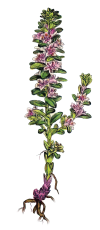
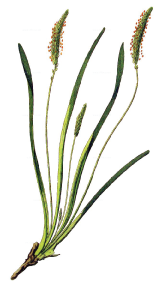
Küniseväli is dominated by the sea milkwort-saltmarsh rush community, which is often flooded with seawater. Saltmarsh rush (Juncus gerardii), whose slender glossy leaves resemble a dark green carpet in early spring, provides the main part of the coastal meadow hay and tastes very good to livestock and migrating geese. Sea milkwort (Glaux maritima) with small fleshy leaves grows as a pioneer species only within the influence of saltwater. White bent (Agrostis stolonifera), edible sea plantain (Plantago maritima), and the similar but poisonous sea arrowgrass (Triglochin maritimum) are also abundant on the meadow.
Coastal Meadow Fauna and Waders
Rare HabitatsOf animals, short-grazed coastal meadows provide a habitat for the natterjack toad, which has become rare throughout Europe.
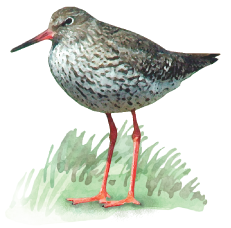
Coastal meadows are very important as stopover and feeding sites for migrating waders and as nesting grounds for birds such as the common redshank (Tringa totanus), dunlin (Calidris alpina), black-tailed godwit, Eurasian curlew, meadow pipit, pied avocet, and northern lapwing.
Common Reed (Phragmites communis)
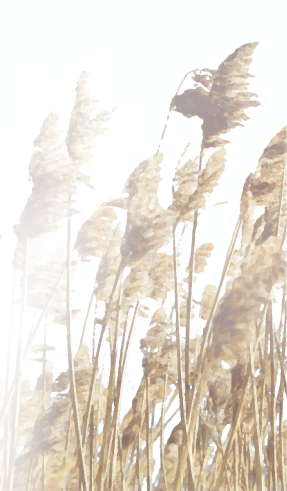
Tallest Grass SpeciesThe common reed (Phragmites communis) is Estonia's largest grass (stem up to 4 m) and is able to grow in fresh and low-salinity water, forming extensive reed beds.
In soil overgrown with reed rhizomes, no growing room remains for other plants, but wild boars and water voles get a good meal here in spring, and many birds find a safe nesting site.
Inhabitants of coastal villages have used reed for centuries as roofing material and spring livestock fodder.